


“Is a house on septic a problem?”
It’s one of the first things people ask when they start looking on the Coast. My answer: no. Not knowing what you’ve got is.
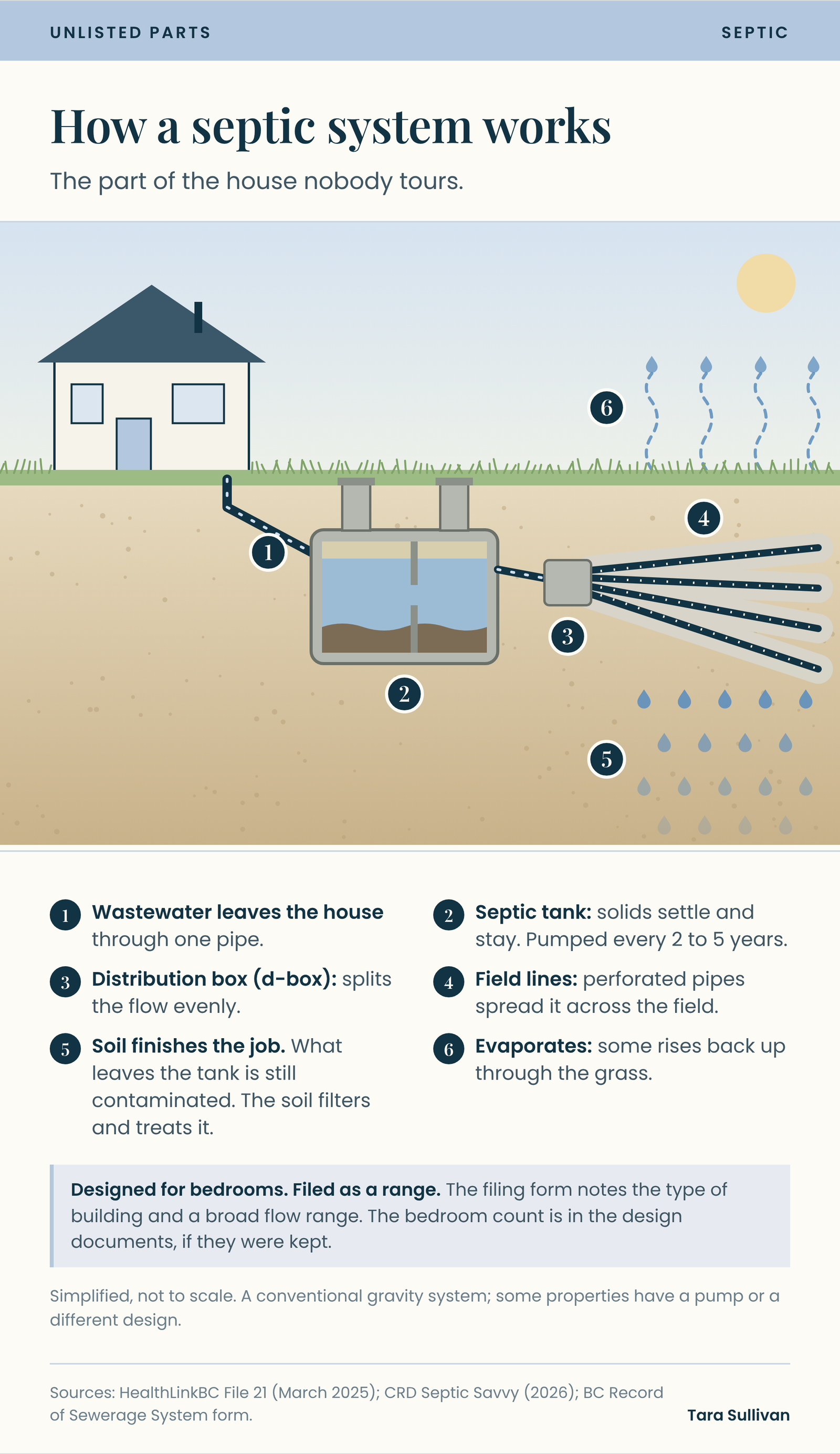
Outside the core of Gibsons and Sechelt, most homes are on a private septic system. That’s normal here, in Roberts Creek, Halfmoon Bay, Pender Harbour and much of the rest of the Coast. Septic systems are fairly simple, and when they work, there’s nothing to worry about. The trick is finding out whether this one works before you own it.
“On file” doesn’t mean approved
Since 2005, only an Authorized Person, a Registered Onsite Wastewater Practitioner or an engineer, can design, install or repair a septic system in BC. They file a record with Vancouver Coastal Health. VCH checks that the paperwork is complete, but it doesn’t approve the design, and nobody routinely inspects existing systems.
So “it’s on file with Health” means someone filed paperwork. It’s a receipt, not a pass.
Get the record, and read what it leaves out
Your agent can order a filing search through VCH’s office in Sechelt for $25, and it usually arrives within a day or two. An older system may have nothing on file at all, which tells you something too.
The record doesn’t list bedrooms, and a system is sized for the house it serves. Ask for the design documents as well, especially if there’s a suite or a guest cabin. Systems installed after 2005 come with a maintenance plan the owner must follow, and on completion day that duty becomes yours.
What an inspection tells you, and what it doesn’t
Ask for a performance report, not a compliance report. A pump-out shows you the tank. A flow test shows how the field is taking water today, but not how long it will last. There’s no official lifespan or replacement cost; the only real number is a practitioner’s quote for that system. One of my clients’ inspections found that only one of four field lines was taking water. That’s a repair coming, and soon.
Ask the inspector two questions: where would a replacement field go, and what would an upgrade cost?
The order I’d check things in
- Before the offer: confirm whether it’s on sewer, a community system or its own septic. Ask what records the seller has.
- In the offer: make the septic inspection its own subject. If the seller hasn’t filled in a Property Disclosure Statement, make that a subject too.
- In the first days: order the VCH search and book the inspection. Leave at least five days between the inspection and subject removal.
- Before removing subjects: compare the bedrooms, suite and cabin against the septic design, and check the distance to any well.
BC’s three-day rescission period is useful, but it’s no substitute for a septic subject. The septic companies I trust are on my Resources page.
This is the short version. The full issue of Unlisted Parts, Filed Isn’t Approved, goes deeper, including why “on file” sounds so reassuring.
Subscribe free for the next one: what a property is legally allowed to be, from suites and cabins to short-term rentals. Looking at a house on septic and stuck on something? Book a call.
